

What do we do when fascist violence reaches yet another level?

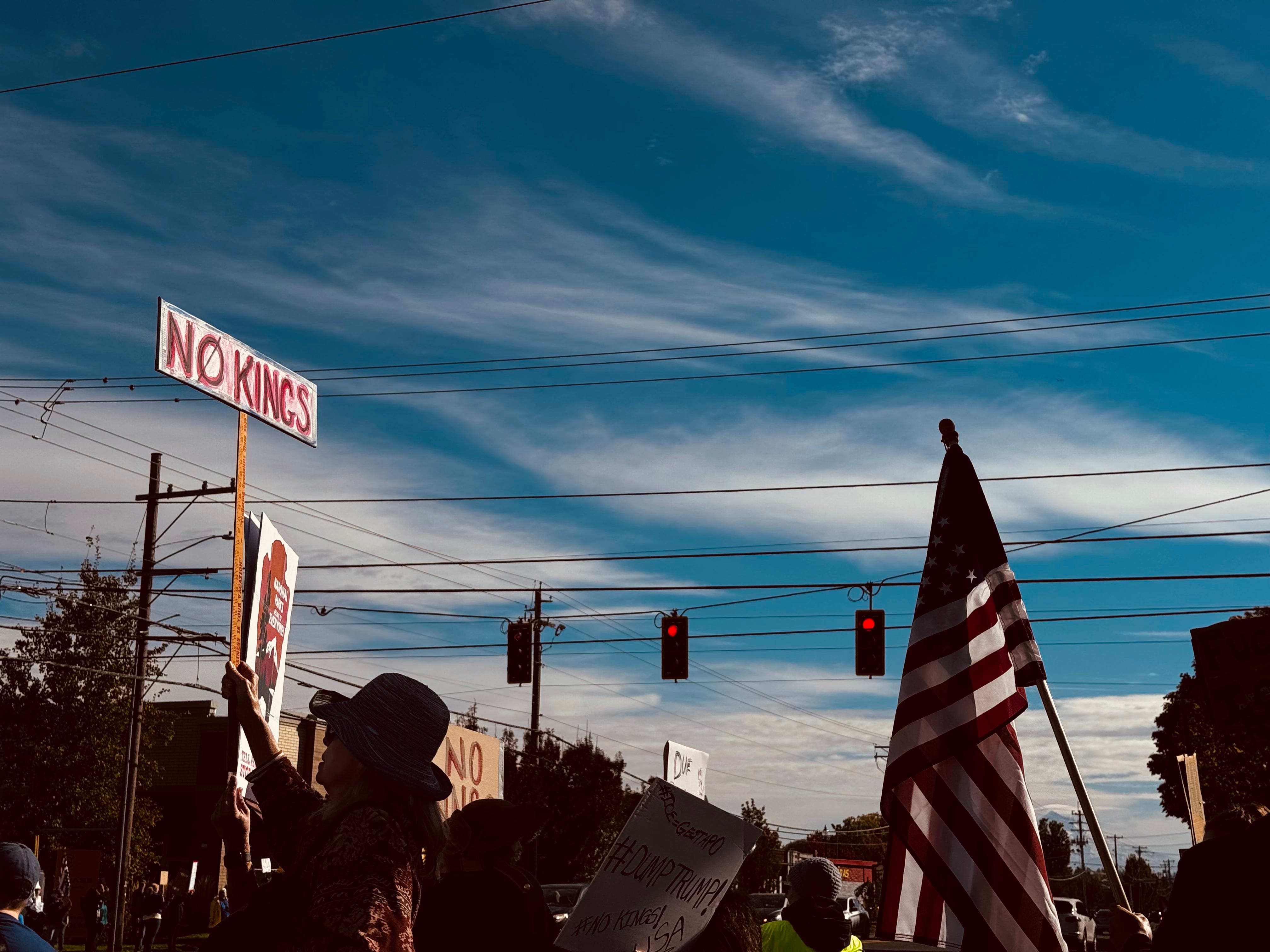
The escalation of fascist tactics continues to escalate. Testing the waters early on after inauguration last year, the President is increasingly going rogue (e.g., bombing another country and kidnapping their president without the official legal channels of approval of Congress) and he and his goons are letting all of their minions loose to live out their racist, fascist dreams of control (e.g., excusing an extrajudicial shooting of a legal observer).
My doomscrolling frequently consists of me exclaiming “fuuuuuuck” under my breath a hundred times and then throwing my phone to the other side of the couch. Truthfully, I should not be doomscrolling; I should be doing something. Yet here I am scrolling while in the background are the echoey sounds of splashes and yelled instructions from my son’s swim club coach, and it all feels too much. We’re just trying to be humans, and yet the world is falling apart. How can I do anything?
This is a question I’ve put out there so many times in past posts, and this helps us all remind ourselves that there are things we can do in our realm. As the fascist tactics escalate and more people are at risk, though, it is going to require us increasingly to get out of our comfort zones. I’m not saying go to places where you are physically at risk if you don’t feel comfortable with that. But for those of us with privilege, it does require some level of risk.
I wrote a post at the beginning of last year about fighting fascism by investing in community. It took off and became something I continuously went back to personally, and that many folks out there resonated with. I wrote an updated post in September, which provides a deeper dive into the definition of fascism and how our capitalist society props up a regime like the one we’re living under. But importantly, it provides specific recommendations on how we can fight fascism at the ground level—by connecting with and supporting the people around us.
I would add an extra note as it relates to resisting ICE, that as you look at the list within the post, think about how that can apply to supporting people most vulnerable to ICE. For me, I’m working directly with my kid’s school community to get families involved in supporting our Latine friends and neighbors. Utilizing our already-existing community organizations to support is a way to begin.
And as we start to think about what “community” means to us re: the above suggestions, this Substack note by Garrett Bucks about Sarah Thankam Mathews’ excellent essay this week (read below) brings another level of context around community:
Reading Sarah Thankam Mathews’s latest (great, as always) got me reflecting on something that those of us who write about community would do well to reflect on more explicitly— the goal of “community” shouldn’t merely be “get yourself some more friends and be less lonely,” but one that recognizes the fundamental attentional challenge of our time— of re-orienting our relationship to other human beings from objects to be viewed passively (either sympathetically, vicariously, judgmentally or malevolently) to people worthy of care in live and active grieving in death.
Mathews points out the many people who have died at the hands of DHS in the past year. Renée Good was not the first, but it does feel symbolic for many. It was caught on video, and she was a White woman. But also, every person who was disappeared and who died while in DHS custody is worthy of collective grief. She writes:
Put otherwise: something still can happen when we watch somebody die, if our attention is procedurally slowed enough to take in the theft of another human’s life, if we claim them as human and grievable, and if we still believe in our ability to act.
We live in racial and cultural siloes thanks to segregation. We also live in political siloes often. However, if we are truly planning to care for and love all our community, it requires going beyond the comfort zone of what we know.
I urge you to read Mathews’ essay here:

For my part, the community building I’ve been focusing on is very much school-related, as I noted before. My son’s school is a global majority and Title I school, so the focus takes an important focus on equity and avoiding White saviorism. This takes various forms: general PTA engagement, ICE resistance community groups, and Integrated Schools. And increasingly, it will require some risk in the form of putting myself out there by saying uncomfortable things (e.g., through posts like this one) and for volunteering to literally put myself out there on neighborhood patrols.
What are you all doing, and where are you finding your community as we continue to resist fascism?
See that’s probably not what could possibly trigger unrest.
Cancelling/setting aside the election would be the next most likely way to risk such horrors.