

The Summer that Fire Changed Everything?
Can we at least treat it with the gravity this "season" deserves?

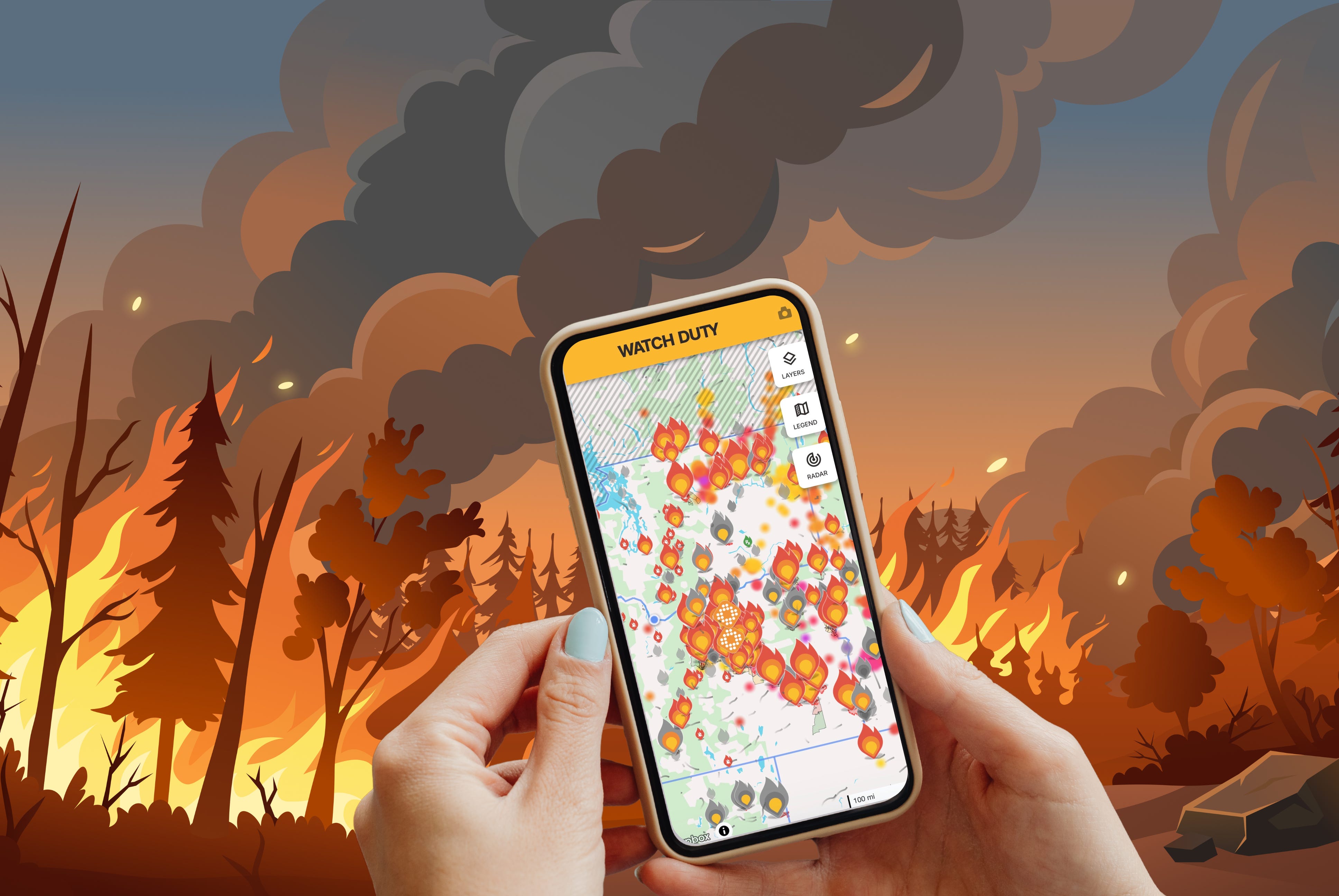
We received notice last Friday that my son’s overnight camp for this week was cancelled because of fire. Not “just” smoke, which is what seems to be affecting most of the world right now, but actual fire.
When I looked at the Watch Duty app this morning, the region where the camp is located in Central Oregon, is under Go-Now fire evacuation orders. This was not a surprise. Central Oregon has been on fire for a few weeks now and folks I know who live in/near or have visited Bend have been on constant fire watch and socked in by smoke.
And we knew way back in winter that this was going to be a bad fire year because of the record low snowpack this year that would have kept drought at bay for a bit longer.
In the West, we pay attention to these things, but eve so it felt another step into the fire apocalypse that has been ramping up each year. Pair that with a literal zoomed-out view of Watch Duty which truly makes all of the Pacific Northwest (and Canada!) look to be on fire, as well as the blazes and record heat in France and Spain, we are no doubt in the era of fire.
The Pyrocene, as fire scholar Stephen J. Pyne calls it.
Steve’s 2021 book of the same name, The Pyrocene: How We Created an Age of Fire and What Happens Next reflects on the fire season for the record books we had just experienced in 2019-2020 and says this in the prologue:
The smoke and flames were a symptom, not a syndrome. The planet’s unhinged pyrogeography was also shaped by fires that should have been present and weren’t. These were fires, historically set by nature or people, to which landscapes had adapted. Now those fires were gone, and the land responded by degrading ecologically while building up combustibles to stoke more savage wildfires. The Earth’s fire crisis, that is, was not just about the bad burns that trash countryside and crash into towns. It was equally about the good fires that had vanished because they were actively extinguished or no longer lit. The Earth’s biota is disintegrating as much by tame fire’s absence as by feral fire’s outbreaks.
Simply put: fires have gotten out of control because we haven’t managed our land correctly by ensuring healthy fire is on the landscape. And Steve posits that has brought us into an era the is undeniably fiery era:
Add up all these fire influences—those directly through flame and those indirectly through smoke, removed fire, fire-enable land use, and a warming climate—and you have the contours of a planetary fire age, the fire-informed equivalent of an ice age. You have a Pyrocene.
And this, my friends is what it feels like to be in the Pyrocene. But what does that mean for all of us living in it?
Right now, of course to those of us not immediately having to evacuate it looks like AQI alerts, fire and disaster tracking apps, and summer plan changes. It looks like watching news reports with apocalyptic scenes of people trying outrun fire in places like Central Oregon and Southwestern France.
With every report and discussion I’ve had with friends experiencing smoke, I could only think: this is the new normal. But it’s not really new, is it? It’s just the norm now. It’s just a matter of where fire will affect people, not when.
We are living in a reality of fire that we have no blueprint for. As Steve also writes:
“There is no precedent for what we are about to experience, no means by which to triangulate from accumulated human wisdom into a future unlike anything we have known before…We have created a Pyrocene. Now we have to live in it.”
Now we have to live with it.
Now we have to live with it.
I keep thinking about that line because what does that look like in the most optimistic sense. It looks like everything I described above, but it also looks like a whole lot of people doing their best around the world to create resilient communities, to create climate forward policies, and to rise up against Big Oil. Sadly, so much of the action is thwarted by greed.
Admittedly an earlier draft of this started me down a whole rabbit hole of “tear the whole damn system down.” I still believe that’s probably the best option, but also, sometimes it’s important to sit with the moment and come to terms with what we are seeing and experiencing.
What we are seeing and experiencing is the apocalypse. There’s no neat and tidy before and after. There’s only a steeper decline each year. 2020’s fire year was bad, but it’s looking like this could be even worse, just concentrated in different places. We are seeing it in action and we need to accept it and learn to live with it.
I’ll also leave you with a quote from an interview I did with Steve Pyne about fire practices and our national parks. I had asked him and Tom Nichols, the former fire chief for the National Park Service if it felt too late with fire policy. And while neither were completely optimistic, Steve did leave us with this that we can take with us. He observed that he has grandkids and great-grandkids even and says “I think they’re pretty worn out, shop-worn and afraid, and we can do better. They deserve better.”
But what has stuck with me is this last line that I’ll leave you with: “We all do what we can with the gifts we have. And you wonder sometimes whether it really makes a difference or not, but you have to try.”
Post Script — if this makes you anxious, don’t look away, do what you can to at least prepare yourself. One thing that is in your control is preparing your home and community. Here are some tools for that:
Create a fire safe home — this depends where you are, but those in the wildlife urban interface aka the WUI, should very much work to create conditions in their landscaping so that fire doesn’t have a chance to spread or burn down their home.
Get yourself a go-bag and create an evacuation plan — everyone should have these, maybe even the first thing you do on your preparedness plan. So let this be your reminder.
Get your community ready — I think of community preparedness as an extension of household preparedness. Remember, knowing your neighbors is a key to survival.
Hi Elizabeth, I'd like to add into your NW fires, the tragic wildfires across Utah and Colorado this summer. One example in southern Colorado, is the Aspen Acres fire which grew to over 100,000 acres and destroyed small towns in the Wet Mountains range. It's been burning for over a month and is still only partially contained.
Let's also please include the massive wildfires across Canada this spring and summer. The Boundary Waters wildfires destroyed whole towns of indigenous tribes. The destruction, smoke and ash affected millions of people in both countries and it's far from over.
Mama Gaia is going through a massive cleansing process in this time period. Our sun has been at solar maximum for the past few years. Clearly, humanity needs to change from extractive energy sources to clean energy. I believe it will happen, and countries outside of the authoritarian regimes are leading the way. Yes, we are certainly in the midst of an apocalypse, and many tragic stories abound during this era of fire and floods and extreme weather across the planet. It will continue for as long as is necessary, until both Gaia and humanity come into balance with one another once again.